If you've ever told your team "please remember to ask for Google reviews" at three staff meetings in a row, you're in good company. Almost every grooming shop owner hits this wall. Clients love the work. They post the fresh-groom photo on their own Instagram. But your Google profile barely moves. The problem usually isn't that your groomers don't care. It's that you're asking people to remember one more thing during the busiest five minutes of the visit.
Here's why the ask keeps slipping, why nagging rarely fixes it, and what actually does.
It's not a discipline problem. It's a pickup problem.
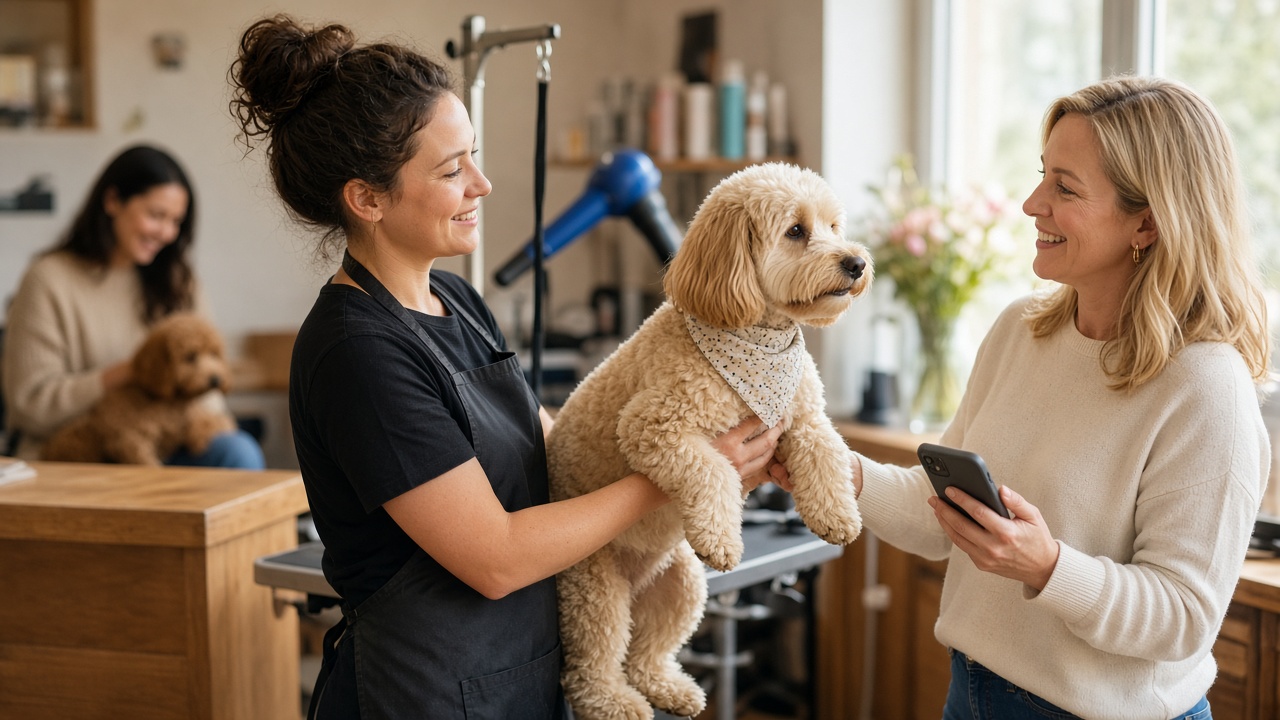
Think about what happens when a client walks in to pick up their dog. Someone is taking payment. Someone is rebooking the next appointment. Someone is explaining that Biscuit's ears were a little irritated, or that the matting meant a shorter cut than planned. The next client is in line. A dog in the back is barking. The groomer who did the work is probably elbow-deep in a doodle and nowhere near the front desk.
Now add "and don't forget to ask for a review" to that moment. It's going to lose almost every time. Not because anyone's lazy, but because everything else at pickup feels more urgent, and it usually is.
Why "just remember to ask" doesn't stick
Even on a slow day, a few things work against the in-person ask:
- It feels awkward. Plenty of groomers are great with dogs and less comfortable asking a person for a favor. So the ask gets mumbled, or skipped.
- There's a quiet fear of the bad review. If a groom didn't go perfectly, nobody wants to invite a public opinion about it, so they hold back. Then the ask doesn't happen on good days either.
- Nobody owns it. Is it the groomer's job? The front desk's? When it's everyone's job, it's often no one's.
- Even when they ask, the client forgets. "Sure, I'll leave you one!" is sincere at the door and forgotten by the time the leash comes off at home.
- People don't know what to write. A blank review box is a surprisingly big hurdle, even for clients who loved the groom.
None of this gets solved by asking harder.
Why nagging makes it worse
The usual next step is pressure: reminders in the group chat, a sign by the register, a "who asked the most this week" whiteboard. It might get a short bump, and then it fades. Along the way, the ask starts to sound scripted and forced, which clients pick up on. Your team starts to feel like they're being graded on something they can't really control.
There's a policy side too. Google's review guidelines don't allow offering incentives for reviews or selectively asking only the clients you expect to be happy. Pressure-driven systems tend to drift toward exactly those habits.
Fix it by taking the ask off people's plates
The fix isn't a better reminder. It's taking the memory part out of the job altogether. Here's what that looks like in a grooming shop:
1. Tie the request to something that already happens. Every groom already ends with a completed appointment, a checkout, or a payment. When one of those events triggers the review request, nobody has to remember anything. If a moment calls for a personal touch, you can still send one manually.
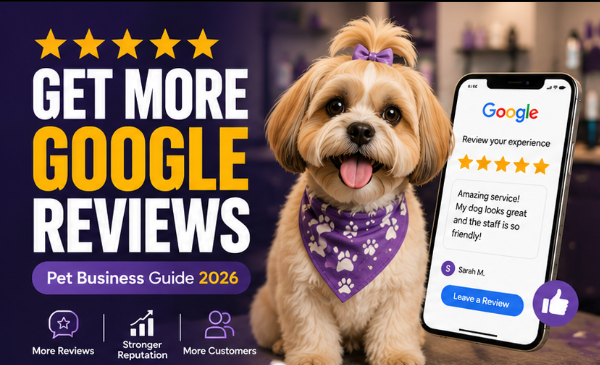
2. Make it about the dog, not your business. "Please review us" is easy to ignore. A message with the client's name, their dog's name, and a photo of that dog looking freshly groomed is a lot harder to scroll past. A before-and-after is even better when you have one. And if nobody had time to grab a photo, a branded company image with the pet's name and a personal message still beats a generic template.
3. Ask everyone the same way. Consistency is the honest approach and the policy-friendly one. Every client gets the same invitation, and every client keeps full access to leave a public review. What you can do is ask about their experience and give them an easy way to tell you if something was off. That way you hear about a nicked ear or a missed bow tonight, not in a review three weeks from now.
4. Make writing the review easy. Offer a few suggested starting points the client can choose, edit, or ignore in favor of their own words. You're not putting words in anyone's mouth. You're getting them past the blank box.
5. Let follow-ups do the following up. Most people who mean to leave a review just need a polite nudge later. An automated reminder handles that, so your front desk never has to chase anyone.
What your team still owns
Automating the ask doesn't take the people out of it. It puts them back where they matter. Your groomers own the groom, and they can still snap a quick finished photo when it's natural to. Your front desk owns the pickup experience. You own reading what clients tell you and replying to reviews. AI can draft those replies, but someone who knows the client should approve them.
That's a far better split than "great groom, then also please remember the review thing."
Try this quick check this week
Pull up last week's completed appointments. Next to that number, write down how many clients actually got a review request. No judgment and no whiteboard, just the two numbers. The gap between them is the problem worth fixing, and it's a systems problem, not a people problem.
How ReviewCrusher handles it
ReviewCrusher is the review platform built specifically for pet-service businesses, and "staff forgets to ask" is the problem it was designed around:
- A completed appointment, checkout, payment, or manual send kicks off a personalized review request by text and/or email.
- The request can use one pet photo or a before-and-after. If no photo was taken, your customized CrushPix company image goes out automatically with the client's name and a personal message about their pet.
- AI writes the message, and you can edit anything before it goes out.
- Clients get review suggestions they can choose, edit, or use as a starting point.
- Follow-ups run automatically, and the feedback step helps you hear concerns sooner. Clients can still leave a public review either way.
It works with the pet-service software you already use, or completely standalone. You'll find more on connections on our integrations section. Want to see it from the client's side first? live customer demo
Ready to stop relying on memory? Start My 14-Day Free Trial: $0 at signup (credit card required), then $59/month for the Growth plan unless you cancel, with a 30-day money-back guarantee after your first paid charge. Plan details are on our pricing page.

.svg)

.svg)
.png)

